
Country focus: Russia. ITS Implementation.
17 Мая 2012
 OF NATIONAL IMPORTANCE
Mankind’s extraordinary technological progress over the past century has brought us to this remarkable stage in transport development and has also helped us to solved previously insurmountable mobility problems.
However, in solving these tasks, transport development has caused other types of problems. Among them are road accidents that cause a still-unacceptable level of human fatalities and injuries, annual consumption expansion of non-renewable energy sources which as a result have a negative influence on the environment. Moreover, for many people the ability and opportunity to move and be mobile is a necessity. Due to these factors people can easily fall into depending upon the performance of the overall transport infrastructure network, but this does not always keep pace with escalating passenger numbers and vehicle flows, and the results, such as delays and untimely cargo deliveries, only serve to increase the levels of dissatisfaction with all modes of transport.
The major factors that negatively influence the harmonised development of a transportation system are insufficient infrastructure capacity and a low or poor level of traffic management. To prevent chaos in our transportation systems it is necessary to influence both key factors. On the one hand everything looks simple enough: it is necessary to build new highways, to improve and expand existing roads to provide maximum traffic capacity and to monitor the quality and operation conditions of the roads. On the other hand the seemingly infinite expansion and improvement of the transport network requires equally unlimited financing. And what are we going to do in urban and suburban areas that have simply run out of room to expand? In this case, it is necessary to create and implement innovative management systems for traffic and passengers. These systems should include means of communication, vehicle management and control systems, traffic monitoring systems and a fully operative and dynamic information collection system. Acquired and analyzed information is used for decision-making and the management of transport infrastructure objects with the application of modern information, telecommunication and telematics technologies. The creation of a thoroughly modern, integrated monitoring, management and control system applicable to passengers, vehicle flows and transport infrastructure is what is really needed.
POLICY AND POLITICS
Over the past 20 years ITS has become an integral part of government transport policy in congested countries in Europe, Asia-Pacific and North, South and Central America regions. Russia has gathered experience of the creation and application of somewhat isolated ITS systems, but until now they have solved only limited, localised tasks. Today though, Russia’s traffic problems have escalated to the point where the widespread application of this experience in forming a single national strategy of ITS development has been deemed necessary.To date Russia has developed isolated ITS elements that have been, by and large, dictated by current market demand instead of a long-term transport strategy. Nevertheless, efforts in the creation of standards, legislation and technical basis have undertaken in the interests of developing national ITS programmes and schemes in Russia. In the process of ITS development we should take into account the consolidation of all existing separate systems in a single technical programme, including subsystems of traffic organization, passengers safety and cargo transportation, and information and navigation services for all traffic participants.
Designing and building intelligent transport systems in Russia relies heavily on scientific principles, taking into account the interest of the country’s many regions and potential users in information and navigation services offered by ITS. Worldwide ITS development shows the high national interest for the creation of indigenous intelligent transport systems, but at the same time there are pressing general globalization requirements in many multinational systems.
Leading countries experienced in the field of ITS applications, such as the UK, Netherlands, USA, Japan, China and others have discovered that in the current market economy conditions solving national transport conundrums has to be a priority – taking stock of these complex development and improvement issues should be considered a joint efforts of the government, Russian regions and business. Moreover, the creation of ITS is a platform for business innovation and stimulates new hi-tech industry development.
SATELLITE STATE
In contrast to others countries during the creation of intelligent transport systems in Russia, we have the possibility to consider and coordinate stages of ITS development with stages of development in global navigation satellite system – GLONASS. Today GLONASS is the basis for regional/local information-navigation systems solving a number of national ITS problem in social and economic areas. Development of the GLONASS system has not only great political value but also being a sizeable infrastructure project it is something of a standard-bearer of Russia’s national economy growth.Two large-scale, socially oriented projects that apply GLONASS/GPS-based technologies are being implemented in Russia at the moment. The first project is the installation of a single emergency number “112” in the territory of the Russian Federation. The second project “ERA GLONASS” is a reaction to the number of road accidents in our vast country and is the logical continuation of the 112 project. In-vehicle equipment will be able to send information automatically (including accurate location) about road accidents to the emergency centres – it is essentially Russia’s version of eCall. The main purpose of this project’s implementation is to reduce the average response time to road accidents. The “ERA GLONASS” system should be completely deployed in less than 800 days and the infrastructure created within this project should be considered as the basic platform for implementation of a national ITS scheme.
NATION SHALL SPEAK UNTO NATION
The creation of the national ITS programme is an extremely costly project that is part of a huge-scale government transport improvement programme. Russia’s transport statistics make for interesting reading:- The railway system is the largest in the world at over than 150,000km;
- almost 950,000 thousand highways;
- more than 100,000km of waterways;
- 630 airports, 100 serving international flights;
- 63,000km of oil pipelines;
- 140,000km of gas pipelines.
- Increasing level of road safety,
- Consolidation of technological independence,
- Implementation of new information technologies, including GLONASS/GPS-based,
- Development of navigation-information systems for the transport network,
- Creation of positive environment for development and implementation of Russian innovation technologies,
- Improvement of life quality.
ITS implementation in Russia, as well as in any other country of the world, has direct economic benefits, such as industry development, regeneration of neglected areas, job creation, medium and small business development and so on. One of the most important problems in Russia is observing standards of transport availability in developed countries. ITS implementation will provide for an increase in road safety, considerably reduce the average response time to road accidents (the former will certainly help the latter in that respect) and will ensure a better use of the available road capacity by decreasing the number of traffic jams and this of course will improve the environmental and ecological situation in the cities. As an added benefit, some of these technical solutions applied to transport will create the possibility of a socially fair method for the collection of vehicle taxes.
Taking into consideration the number of potential ITS users in Russia, the realisation of such a project plays an important role in creating a positive social and economic climate inside the country, plus the project will attract investments from outside the country and show Russia in a positive light.
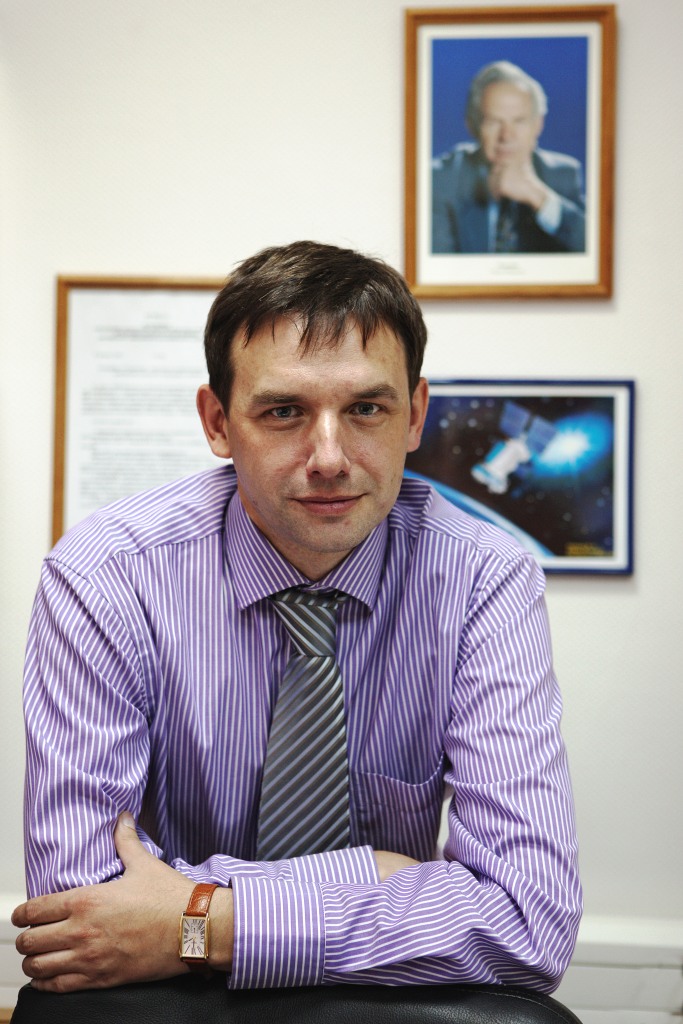
Igor Lissovoy
Chief in Editor
Vestnik GLONASS